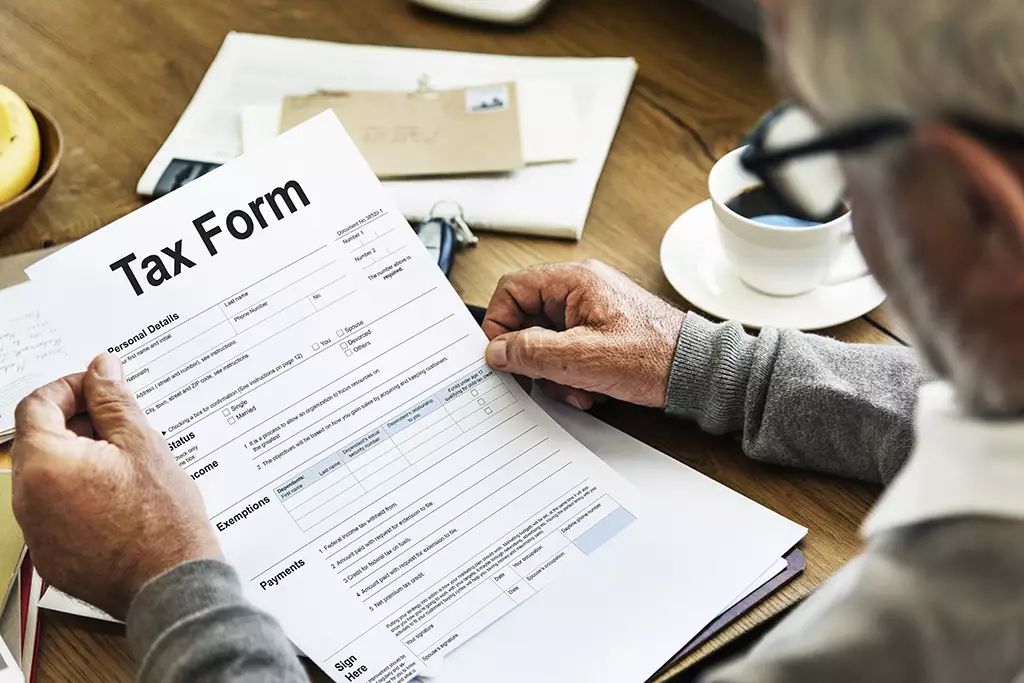
Residing in Thailand 180+ days - ready to file your 2024 tax returns from 1st January 2025?

Faz

Well-known member
It's always been the case that if you reside in Thailand for more than 180 days in a calendar year, you are classed as a 'tax' resident, but there was no enforcement of this law on foreigners - until now!

Two years ago, I read of proposed changes to the Thai tax laws, but at that time the changes were aimed at Thais and foreigners with businesses in Thailand and overseas and surely this wouldn't apply to foreign retirees, would it? In November 2023 the Government announced changes to Thai tax laws, which included not only foreigners and Thai with businesses, but foreign individuals as well. I still remained sceptical, believing it was being reported incorrectly, or as with other laws it would never be enforced against foreign expats, but sadly I was wrong, it's actually happening as of 1st January 2025.

I still wasn't concerned, after all most foreign nationals governments have DTA (Double Taxation Agreements) with each other, right - wrong!
The devil is actually in the details of these DTA's with Thailand, and for many, those details now known, various sources of 'incomes' are not all covered under these DTA's.

For example, I'm now aware that for US nationals, Social Security payments are excluded from taxation in Thailand under their DTA agreement, but private and company pensions are not and are therefore regarded as assessable incomes for taxation when transmitted to Thailand.
UK nationals do not unfortunately fair as well as our US counterparts and State, private and company pensions are not covered under their DTA and are therefore assessable incomes for taxation when remitted to Thailand. The only exclusion from taxation being a Civil Service pension, which is 'exempt' to taxation.

The first step of all nationalities, where your Countries have a DTA with Thailand, is to familiarise yourself with the details of that agreement, in order to know any particular income exclusions, before you can start to calculate if your income remittances to Thailand are classed as assessable incomes for taxation in Thailand.

Under the Thai Tax law, any foreigner remitting more than 200,000 BHT to Thailand in a Thai tax year, must file a tax return form, regardless of whether his remittances are eligible, or none legible for tax purposes The TRD (Thai Revenue Department) will decide that. The penalties for not filing a Thai tax return or deliberately trying to avoid taxation are severe, punishable by a fine not exceeding 200,000 BHT, 1 year of incarceration, or both.

The new Thai Tax laws became effective as of 1st January 2024.
The Thai tax years run from 1st January to 31st December, with tax returns being filed between 1st January to 31st March in the following year.
So, funds remitted to Thailand from 1st Jan 2024 to 31st December 2024 must be declared and filed between 1st January until 31st March 2025.
You'll need to obtain a TIN (Tax Identity Number) from your local Revenue department, if you don't already have one.

It's not all as 'doom and gloom' as it first appears. Using the Thai tax system, I've been doing some calculations and a large percentage of foreigners will not be eligible for paying tax in Thailand, but I'll go through the calculations, allowances, Thai tax rates, and eligible tax credits later.
 
Last edited:

kaptainrob

Administrator
Under the Thai Tax law, any foreigner remitting more than 200,000 BHT to Thailand in a Thai tax year, must file a tax return form, regardless of whether his remittances are eligible, or none legible for tax purposes The TRD (Thai Revenue Department) will decide that.
Where did you source that Faz?

All the qualified experts I've heard from would rephrase it as ...

"any foreign tax resident remitting income to Thailand must file a tax return form if the annual total is assessable under TRD law"
 

Faz

Well-known member
"any foreign tax resident remitting income to Thailand must file a tax return form if the annual total is assessable under TRD law"
All incomes transferred to Thailand are treated as assessable income for tax, unless 'exempt' under a DTA.
Certain exceptions under certain situations can apply.

Fortunately, I have a very good friend who is a retired UK chartered accountant who has been following the Thai tax rules very carefully out of professional interest. He doesn't spend 180 days in Thailand, so not classed as a Thai tax resident.
I've spent days going through the information and receiving advice and confirmation from him.

It's not for an individual to decide if your transmitted funds are subject to Thai taxation.
You file the relevant form and a Thai tax assessment officer will decide if tax is due or not.
That said, if you know without reservation which (if any) transferred funds are exempt from tax, following the tax allowances and Thai tax rates, plus a few other known facts, you can work out your own tax liability. There are other factors to also consider, one of which is the use of tax credits (if applicable).

Even non-assessable income remitted to Thailand, such as the SS pension of US nationals, has to be declared on the form for them to check.

Explore;
 

kaptainrob

Administrator
All incomes transferred to Thailand are treated as assessable income for tax, unless 'exempt' under a DTA.
Certain exceptions under certain situations can apply.
Agreed, the key word being 'income'.

Fortunately, I have a very good friend who is a retired UK chartered accountant who has been following the Thai tax rules very carefully out of professional interest. He doesn't spend 180 days in Thailand, so not classed as a Thai tax resident.
I've spent days going through the information and receiving advice and confirmation from him.
As discussed privately, I will wait for his data and LINK to the relevant law otherwise I think he's talking BS.

It's not for an individual to decide if your transmitted funds are subject to Thai taxation.
You file the relevant form and a Thai tax assessment officer will decide if tax is due or not.
I call BS on that. According to my investigations it's up the 'tax resident' to declare 'assessable income'. If one has NO assessable income a TIN is not required and therefore no form filing is necessary.

The Carl Turner video you've posted is old and irrelevant IMO. Difficult to follow the Cypriot DTA expert too! Carl's recent video below is more relevant and up-to-date

Ben Hart has made a number of video's regarding Thailand tax LAWs and puts down all the 'charlatans' posting misinformation, some being (supposed) qualified Tax Agents.

One thing we can agree on is the potential for TRD to issue new Forms, PIT and others, plus further guidance as to what may be required in regards to international remittance of capital sums. As usual in Thailand, this may occur at the last minute ... possibly before Jan 1st.
 

Faz

Well-known member
As discussed privately, I will wait for his data and LINK to the relevant law otherwise I think he's talking BS.
Clarified, and I misinterpreted his statement of, "even if you only transfer 200,000 BHT income to Thailand" as being a starting point.
It is in fact any income transferred to Thailand since 1st Jan 2024.

On January 1, 2024, a tax rule was introduced that changed the taxation of foreign-sourced income. Presently, under section 41 of the Thailand Revenue Code, Thai nationals and foreigners who have been living in the country for at least 180 days in a single tax year will be taxed on any foreign income they bring into the country, regardless of when it was earned.

Thai revenue codes. (Thai Tax Laws)
Section 40 Assessable income is income of the following categories including any amount of tax paid by the payer of income or by any other person on behalf of a taxpayer.

(1) Income derived from employment, whether in the form of salary, wage, per diem, bonus, bounty, gratuity, pension, house rent allowance, monetary value of rent-free residence provided by an employer, payment of debt liability of an employee made by an employer, or any money, property or benefit derived from employment.

Section 41 A taxpayer who in the previous tax year derived assessable income under Section 40 from an employment, or from business carried on in Thailand, or from business of an employer residing in Thailand, or from a property situated in Thailand shall pay tax in accordance with the provisions of this Part, whether such income is paid within or outside Thailand.

A resident of Thailand who in the previous tax year derived assessable income under Section 40 from an employment or from business carried on abroad or from a property situated abroad shall, upon bringing such assessable income into Thailand, pay tax in accordance with the provisions of this Part.

Any person staying in Thailand for a period or periods aggregating 180 days or more in any tax year shall be deemed a resident of Thailand.

The above makes it clear of who is classed as a resident for tax purposes and what 'incomes' are regarded as assessable for tax.
I call BS on that. According to my investigations it's up the 'tax resident' to declare 'assessable income'. If one has NO assessable income a TIN is not required and therefore no form filing is necessary.
Section 40 of the Thai Revenue Codes defines what is regarded as income for tax purposes.
If you feel you don't have any assessable income, then don't file a tax return, but it could beggar the question of how you financially survive in Thailand.

More concerning are the new Thai Tax Laws currently under discussion.
 

Faz

Well-known member
I'm sure that when most heard of this new tax law introduced from 1st January 2024, the first impression is it won't affect me as my Country has a DTA (Double Taxation Agreement) with Thailand. Unfortunately, DTA's differ in what incomes are exempt, leaving other incomes assessable for taxation in other jurisdictions.

This is for British expats residing in Thailand for 180+ days, regarded as a resident for Thai tax purposes and remits income from overseas to Thailand.
The DTA between the UK and Thailand only exempts 'Civil Service' pensions, but not the State pension or private and company pensions.

A brief summary of the Thai taxation system, which is made up of allowable 'credit' against your transferred incomes, then a tax table to calculate any taxable income. Certain 'credits' can be applied to offset any due tax.

You must file a tax form if you remit any assessable income in a tax year.
The Thai tax year runs from 1st Jan, until 31st December and tax forms filed the following year from 1st Jan up to 31st March.

First calculate the total funds transmitted to Thailand for the current financial year.
There is a table of deductible allowances against these remittances.
To file as a single person complete form PND60.
To file as a married couple complete form PND61.

For a single person 60,000 BHT.
For a married couple (wife not working or filing a tax return.) 120,000 BHT
If your are 65+ 190,000 BHT
50% of your transferred income (pensions) up to a max of 100,000 BHT.

For a single person under 65 the total deductible allowances would be 160,000 BHT
For a single person aged 65+ the total deductible allowances would be 350,000 BHT
For a married person under age 65 the total deductible allowances would be 220.000 BHT
For a married person 65+ the total deductible allowances would be 410.000 BHT

Total funds remitted to Thailand – deductible allowances = assessable income for taxation.

The Thai taxation rates are as follows;
The first 150,000 is taxed at 0%
150 -300,000 Taxed at 5%
300 -500,000 taxed at 10%
500 -700,000 taxed at 15%
700 – 1,000,000 taxed at 20%
1 – 2,000,000 taxed at 25%
2 – 5,000,000 Taxed at 30%

Tax example;
Married man, aged 65+, wife not working or submitting tax assessment forms, and transmitted 600,000 BHT to Thailand in the financial year.
600,000 – deductible allowances of 410,000 BHT = 190,000 BHT taxable income.
First 150,000 BHT of assessable income is rated 0%.
190,000 – 150,000 = 40,000 BHT taxable income at 5% = 2,000 BHT tax due.

In addition to the above, you may also claim ‘tax credits’ against any due tax, which consist of tax already paid in the UK in the current financial year, and/or Savings prior to 31st December 2023.

If you paid £1,000 tax in the UK (43.5 BHT exchange rate) = 43,500 BHT
Applied against tax due of 2,000 BHT = no tax due.

Savings prior to 1st January 2024 are exempt taxation.
In the event you want to make a major purchase, buying a new car, provided your UK savings as of 31st December 2023 were for example £80,000, you could transfer £25,000 (circa 1million baht) without paying any tax. (Claimed as a tax credit against prior savings). However, your non-taxable available ‘tax credit’ is now reduced from £80,000 to £55,000.
 

Rockitt

Well-known member
Thanks for the updates Faz.
I’ve seen a couple of YouTube vids about this tax matter over the past few weeks, mainly from people offering a service for their so called expertise. All for a cost of course.
Your breakdown and examples are a big help so thanks again.
 
Last edited:
  • Like
Reactions: Faz

Faz

Well-known member
I should clarify, when I mention 'incomes', I mean only those classed as assemble incomes for tax.
Some types of income are exempt, which will be defined in any DTA with your Country.

Yesterday having breakfast with the usual expats, where we meet every Tuesday morning at a local restaurant/bar, the topic of this new tax order came up.
A disgruntled Irish guy stated he'd heard 101 different versions, but he was exempt Thai tax under their DTA with Thailand.
I was very sceptical of that statement. Initially, most expats were under the false impression that if your Country had a DTA with Thailand you were exempt of tax, but that turned out not to be the case. The devil is in the details of each Country DTA.
For Brits, only Civil Service pensions are exempt from tax in Thailand.
A Countries DTA will always overrule and take precedence of the local tax laws.

Later returning home and inquisitive, I downloaded the Irish DTA, and sure enough it excludes all pension types from tax in Thailand.
Lucky bastards!
 

kaptainrob

Administrator
Thanks for the updates Faz.
I’ve seen a couple of YouTube vids about this tax matter over the past few weeks, mainly from people offering a service for their so called expertise. All for a cost of course.
Among a plethora of misinformation YT vids i have come across at least 2 Bangkok tax agencies touting for business and quoting 7000 bt or more just to register a client for tax.

They not only lie about it being a tedious undertaking, it's not, but they follow up with "free consultations" if you provide contact details. Before you even get that consultation a request for personal data is send out. Ben Hart quite rightly calls them charlatans.
 

Faz

Well-known member
Your breakdown and examples are a big help so thanks again.
Firstly, knowing which types of income are assessable for tax in Thailand, then from there applying the Thai tax 'allowances' first against any remitted taxable income, then using the Thai tax rate chart, you can calculate your own tax liability and go further to calculate the maximum amount of income you can remit in a calendar year, and not be liable for tax.

For example, this current tax year 2024, I've remitted a total of 740, 172 BHT from State and 2 private pension sources, all of which are taxable in Thailand.
My wife works, although she doesn't file a tax return, so I'll apply using the single person allowance.
After calculating my deductible 'allowances' of 350,000 BHT and using the Thai tax rates, I was left with a figure 16,517 BHT to pay in taxes.
However, I then used the tax already paid in The UK as a 'credit' (using 43.5 BHT as the exchange rate) which was greater than the due tax figure, leaving zero tax to pay. I went further to calculate that I could remit up to 800,000 BHT per annum, which equates to 66,666 BHT per month without paying any tax in Thailand.

I use the funds in the bank method for my extensions of stay based on Thai spouse, so usually jut make 2 remittances a year to my Thai bank account.
Any funds/incomes remitted prior to 1st January 2024 are exempt of any tax liability.

Getting 'ahead of the game', and it's meaning.
My average monthly outlay in Thailand for utility bills, shopping, wife's allowance, and sundries is circa 35 - 40,000 BHT per month.
But, having calculated the amount of accessible income I can transmit to Thailand within a year, and not be eligible to pay any taxes, it's to my advantage to transmit as much as I can within that financial year up to the maximum allowable without paying tax.
If I transmit 800,000 to Thailand within a tax year, even though I may only spend 500 - 600,000 BHT, that leaves a surplus of 200,000 BHT in my Thai bank account that I can use in the following year, or subsequent years to cover for any major expenditures, such as buying a new vehicle.
If I only transmit as much as I need, then transmit 1,000,000 BHT in a tax year to purchase a new vehicle, then I will certainly be eligible to pay tax on that the following year.
 

Faz

Well-known member
Probably late January, early February, I'll complete my tax return form with the help of my accountant friend.
I'll then be able to advise how to complete these forms, and what figures to put where.
It's like anything else, the first time is a daunting experience, but thereafter you just repeat the process each year.

You will have to provide supporting documentation to evidence the figures submitted on the tax return forms, so it's a good idea to download any P60' from HMRC, and any pension providers as well as UK and Thai bank statement for the applicable period.
As any funds in a UK bank account prior to 1st Jan 2024, can be remitted at a later date as a 'tax' credit and not subject to Thai tax, it's a good idea to have an end of year UK bank statement for 2023 at hand.

One abnormality that I haven't as yet discovered the answer to is the difference in tax years.
Thailand tax year runs from 1st January to 31st December each year, with any tax returns being submitted between 1st Jan - 31st March the following year.
The UK tax year runs from 1st April to 31st March the following year.
This means that submitting tax returns between Jan - March in 2025, you can only provide P60's etc from the UK for tax year 2023-2024. They are not usually accessible until May of the subsequent year.
It may be possible to file your tax return in 2025, then submit more up-to-date documentation later in May, but TRD usually apply a late filing fine after March 31st. I did request the advice of TRD on this issue, but got that 'blank' stare.
 

Faz

Well-known member
One thing we can agree on is the potential for TRD to issue new Forms, PIT and others, plus further guidance as to what may be required in regards to international remittance of capital sums. As usual in Thailand, this may occur at the last minute ... possibly before Jan 1st.
Don't count on it, although my local revenue department did state the PND60/61 tax forms would be available to download between Xmas and New year, at which point hopefully their site will be updated for the 2024 period. 🙄
 

Faz

Well-known member
Among a plethora of misinformation YT vids i have come across at least 2 Bangkok tax agencies touting for business and quoting 7000 bt or more just to register a client for tax.

They not only lie about it being a tedious undertaking, it's not, but they follow up with "free consultations" if you provide contact details. Before you even get that consultation a request for personal data is send out. Ben Hart quite rightly calls them charlatans.
Nobody more notorious for that than Siam Legal.
An acquaintance of mine planning his retirement to Thailand left it too late to obtain the Non O in the UK, and was issued a Tourist visa.
Arriving in Bangkok and now flustered, he approached SL for advice.
They basically frightened the life out of him by stating without their help he would be refused a Non O and extension in Thailand and would probably be deported, thereby ruining his retirement plan.
He'd already deposit the 800K the previous year during one of his many visits over the years.

They obtained both the Non O and 1 year extension the same day.
Then they gave him the bill of 52,000 BHT - and that was back in 2016!

He then moved to Mukdahan where his long time Thai girlfriend lived.
Filing a TM30, then submitting his first 90-day report, Mukdahan Immigration refused to accept it and advised he did it in Bangkok who issued the stamps.
It was obvious being issued the Non O and 1 year extension on the same date didn't follow the laid down procedure.
He contacted SL, and they didn't want to know.
Fortunately, Mukdahan did grant him a multi re-entry permit allowing him to do border runs and new entries every 90 days for that year.

Using agents and the such like can cause further issues down the line, but it can usually be sorted for a further fee, of course.
 

kaptainrob

Administrator
Don't count on it, although my local revenue department did state the PND60/61 tax forms would be available to download between Xmas and New year, at which point hopefully their site will be updated for the 2024 period. 🙄
I'm in a hurry to do nothing 😎

As you highlighted, correlation of tax years is a potential hurdle for many Western expats. China runs Jan to Dec so there's no problem there except the language barrier which may be also be a problem for many Europeans.

Owing to the above factors alone I can't see a logical way forward for TRD to require any documentation from retiree Expats provided there's a DTA in force and a foreigners TIN is provided.

We'll have a clearer understanding of the whole shebang by April. Expect the usual backpedaling as RD offices become overwhelmed with inquires.
 

Faz

Well-known member
Owing to the above factors alone I can't see a logical way forward for TRD to require any documentation from retiree Expats provided there's a DTA in force and a foreigners TIN is provided.
The DTA's cover what incomes are regarded as 'exempt' from tax, leaving other incomes liable for tax.
The UK DTA, only exempts 'Civil servants' (government workers) pensions from taxation. The government state pension, private and company pensions are not exempt and therefore an assessable income for tax. 😭
 

gordonzola

New member
Reading with interest!

As a UK guy, I'm aware that I might be liable for Thai income tax once the TRD decides what will be considered assessable income tax. As usual, the whole debacle is surrounded by a barstool / my friend's lawyers etc. I read the Thai media press finance sections most mornings out of interest (sad I know) and even they are only speculating on what might be enforced and by what means, the usual clear-as-mud Thai procedure.

Remember that this 'new' adjustment of the existing tax law was not designed specifically for foreigners but for wealthy Thais who squirrelled their income earned off-shore one year and legally brought it into Thailand the following tax year without any tax due.

If (and it's a BIG if) the TRD proceed with gung-ho enforcement, then how will they deal with thousands of seemingly unknowledgeable dim-wits converging on tax offices demanding a TIN number for a tax declaration form with nothing due? Many scaremongers have recited the old 'linked tax return to immigration 'visa' renewal!

Until anything is officially announced concerning this matter I'm doing nothing. Millions of Thais are not registered for tax, even though they own small businesses and earn over the threshold to be assessed but don't earn (declare) enough to be liable for tax.
My wife works, although she doesn't file a tax return
Why not?

So much misinformation out there from dubious sources and people quoting so-called 'facts' that are guesses or opinions that can't be backed up by official sources.

For those who want to delve into the seemingly complicated world of Thai tax forms:
Link: Year 2023 | The Revenue Department (English Site)

I've been filling in tax forms for many years so the applicable forms relating to my circumstances seems quite simple compared to many other countries, so no big deal if it comes to fruition.

As @Faz rightly says
As any funds in a UK bank account prior to 1st Jan 2024, can be remitted at a later date as a 'tax' credit and not subject to Thai tax, it's a good idea to have an end of year UK bank statement for 2023 at hand.
IMO, this is classified as savings and isn't assessable income but has to be proven with statements from your financial institutions. For many, this will prove difficult as the amounts would have to correspond to the figures declared as savings and not actually from accrued pensions in subsequent years of submission.

It's good to discuss this but I will take all advice as hearsay until it can be backed up by official sources. Let's wait and see!
 

Faz

Well-known member
As a UK guy, I'm aware that I might be liable for Thai income tax once the TRD decides what will be considered assessable income tax. As usual, the whole debacle is surrounded by a barstool / my friend's lawyers etc. I read the Thai media press finance sections most mornings out of interest (sad I know) and even they are only speculating on what might be enforced and by what means, the usual clear-as-mud Thai procedure.

Remember that this 'new' adjustment of the existing tax law was not designed specifically for foreigners but for wealthy Thais who squirrelled their income earned off-shore one year and legally brought it into Thailand the following tax year without any tax due.

If (and it's a BIG if) the TRD proceed with gung-ho enforcement, then how will they deal with thousands of seemingly unknowledgeable dim-wits converging on tax offices demanding a TIN number for a tax declaration form with nothing due? Many scaremongers have recited the old 'linked tax return to immigration 'visa' renewal!

Until anything is officially announced concerning this matter I'm doing nothing. Millions of Thais are not registered for tax, even though they own small businesses and earn over the threshold to be assessed but don't earn (declare) enough to be liable for tax.
Just to be clear, this discussion is not in relation to the current news about the Revenue department currently in the process of drafting new tax laws, which was announced in Sept 2024. Any talk on this subject is totally speculative. Unfortunately, many foreigners are confusing this with a new order given and posted in the Royal Gazette at the end of 2023 which changed an existing rule under section 41 of the Thai revenue codes in the Thai tax codes, allowing the Thai revenue department to tax foreign incomes from the start of 2024. It is this new change to an existing Thai taxation rule that is being discussed in this topic.
It is factual, it is law.

On January 1, 2024, a tax rule was introduced that changed the taxation of foreign-sourced income. Presently, under section 41 of the Thailand Revenue Code, Thai nationals and foreigners who have been living in the country for at least 180 days in a single tax year will be taxed on any foreign income they bring into the country, regardless of when it was earned.
Types of assessable income in Thailand include:
Employment income (such as wages and salaries)
Proceeds earned from business operations
Income from business operations of an employer
Passive income or property-related income (such as interests, dividends, rental income, and goodwill)

The new tax policy proposed by the Thai Revenue Department (currently still in review and not part of this discussion) will mark a significant change to Thailand’s tax law. Unlike the current law, foreigners and locals will be taxed on income they earned from abroad even if they do not bring it into the country.

The important wording here is 'income'.
According to the TRD, all incomes transmitted to Thailand are classed as liable to taxation.
However, many Countries have a Double taxation agreement with Thailand and any DTA overrules the local tax laws.
In the case of the UK, the DTA only excludes 'Civil Service' pensions as exempt of tax. State, private and company pensions are not included and are therefore taxable in Thailand since 1st Jan 2024 when the new rule came into force.

If you haven't already watched the very information video posted by @kaptainrob then I suggest you do so.


Any funds you may have had in your foreign bank accounts prior to 1st Jan 2024, are not assessable for taxation if remitted to Thailand.
If you are transferring funds held prior to the tax change, then you are not required to file a tax form.
Read my previous posts. Funds held prior to 1st Jan 2024 can also be transmitted and used as a 'credit' against any tax liability.
Tax paid in the UK during the current financial year, can also be as a 'credit' against any tax liability.

Simply because there is no proof of income as transactions are 95% cash.
80% of Thais are what we would class as self-employed. They are not required to keep accounts.
My wife runs her own hairdressing business in a prime location, but competition is tough and charges have to be compatible.
She can turn over 35K per month, then deduct the cost of 15K rent, electric, water and supplies and her nett is between 10-15K per month.
It's enough for the average Thai to exist.
Workers of big stores such as Makro, Big C, Tesco are all paid minimum wages, which is 330 - 370 BHT per day They receive a monthly pay check as proof of earnings, but they do not file tax returns as the income falls below levels of taxation.
 

Faz

Well-known member
IMO, this is classified as savings and isn't assessable income but has to be proven with statements from your financial institutions. For many, this will prove difficult as the amounts would have to correspond to the figures declared as savings and not actually from accrued pensions in subsequent years of submission.
As I currently understand it, if you are only transmitting 'funds' held in a foreign bank account prior to 1st Jan 2024, then there is no requirement to apply for a TIN or file a tax return.
However, if you are remitting taxable and non-taxable incomes (those exempt from tax under a DTA) or Savings prior to 2024, then I would assume they would all have to be recorded on a tax return, some as taxable, some as non-taxable and evidence of such would have to be submitted.

I already have my P60's from the DWP, and 2 private pensions downloaded, as well as a notification from HMRC.
Come Jan 1st I will download my 2024 UK bank statement and obtain a Thai bank statement for the same year, ready for submission with the form.
I'll also download a UK bank statement for 2023 showing funds in the account at that time, should I later wish to transfer some of those funds as a 'credit' and exempt of taxation.
I've already calculated I will not be eligible to pay tax in 2025 for the 2024 tax year.
 
Top